From planning and design to final release, every stage of a game carries the immense effort and investment of the game company. In particular, key creative assets, undisclosed game plots, and core materials like character designs not only constitute the unique charm of the game but are also vital commercial assets of the company.
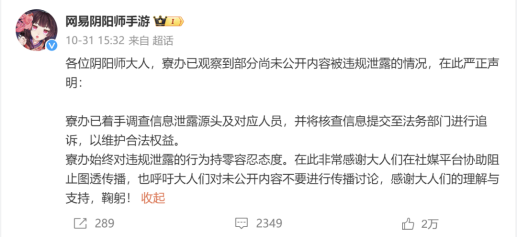
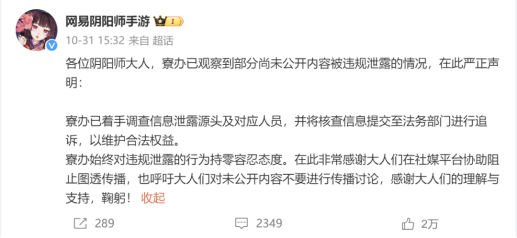
However, in reality, the phenomenon of "material leaks" (early leaks) occurs frequently—where critical information is leaked before the game company has officially released it. This undoubtedly brings serious impact to the game company’s market strategy deployment, brand image, and economic benefits. Many well-known domestic and international games, such as The Legend of Zelda: Tears of the Kingdom, Halo 4, Honor of Kings, and Onmyoji, have suffered from such leaks.

This article will use existing typical cases as a starting point to deeply analyze how game companies can use legal weapons for effective rights protection when encountering material leaks, and how to prevent such issues during daily cooperation.
PART 1: Case Introduction
In the technical contract dispute between Guangzhou Boguan Information Technology Co., Ltd. and Chengdu Huoshanshi Network Technology Co., Ltd., the plaintiff and defendant signed a Commissioned Development Contract for Artworks, which specifically emphasized that if the confidentiality obligation was breached, the defaulting party must compensate the other party for all resulting losses.
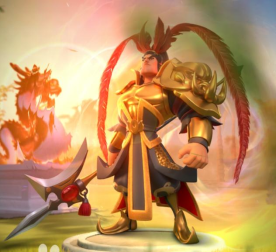
During the performance of the contract, an employee of the defendant violated the confidentiality agreement by privately photographing the original painting of "Dajiangshan Ibaraki Doji" (renamed "Purgatory Ibaraki Doji" upon release) during the work process and disclosing it online, causing various negative impacts on the plaintiff. The plaintiff subsequently filed a lawsuit requesting the rescission of the Commissioned Development Contract for Artworks and demanding the defendant compensate for economic losses totaling RMB 1 million.

The Guangzhou Tianhe District Court held that:
The original character painting was leaked before official release, and the defendant's former legal representative admitted in an email that it was done by their employee; therefore, the defendant breached the confidentiality obligation stipulated in the contract and should bear liability for breach of contract.
After the leak, the plaintiff did modify the character image and took measures to protect its rights; the court supported the plaintiff's claim for the additional costs and rights protection expenses incurred as a result.
Regarding the plaintiff's claim for expected revenue and compensation for damage to corporate image, the court did not support these due to a lack of evidence.
Judgment Result:
The defendant shall compensate the plaintiff for economic losses of RMB 130,000.
The other litigation claims of the plaintiff, Guangzhou Boguan Information Technology Co., Ltd., were dismissed.
PART 2: Case Analysis
Common causes of material leaks include data leaks from test servers or leaks by employees of partners commissioned for research and development. The aforementioned case is a typical example of a partner's employee leaking confidential materials.
1. Nature of the Act and Determination of Liability Regarding the determination of the nature of the act, game companies generally stipulate confidentiality obligations in contracts with partners such as outsourced art teams. The early disclosure of game materials by partners or their employees constitutes a breach of contract, and the game company has the right to demand that the partner bear corresponding contractual liability.
Additionally, if the leaked materials were commissioned for development and the contract explicitly stipulates that the copyright belongs to the game company, then the unauthorized disclosure of undisclosed materials by the partner or its employees on social media or other online platforms also infringes upon the game company's right of publication and right of communication via information networks. The game company may also demand that the partner bear liability for copyright infringement.
2. Determination of Compensation Amount Regarding the calculation of compensation, game companies should thoroughly consider the partner's fault, the performance of the contract, the negative impact of the leak, additional production and promotion costs, and rights protection costs. Providing corresponding evidence for these factors ensures that the company's claims are more likely to be supported by the court.
In this case, the plaintiff and defendant had not previously agreed on a specific liquidated damages clause for leaks, only a general agreement to "compensate for all losses suffered". To prove its total losses, the plaintiff:
Used various news reports to prove the high IP value of the character "Ibaraki Doji".
Detailed the various additional labor and material costs incurred for modifying the original painting (including market research, painting modifications, texture adjustments, promotional art, and marketing activities) as well as rights protection costs.
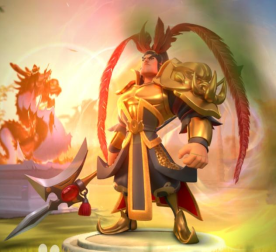
Comparing this case with the leak of the "Lu Bu" image in Rise of Kingdoms, it should be noted: while positive reports can prove IP value, they may also lead a court to believe the leak did not negatively impact the game’s reputation or social influence. In the absence of evidence for modification costs or negative player feedback, a court might conclude the breach had minimal impact on the final product and may reduce the compensation amount accordingly.
PART 3: Enlightenment for Rights Protection
1. Detailed Contractual Agreements in Advance
(1) Game companies should explicitly stipulate the partner’s confidentiality obligation and the company’s ownership of copyright to secure more room for rights protection and multiple grounds for claims.
(2) Contracts should clearly define compensation standards for breaches of confidentiality and intellectual property clauses, covering as many types of losses as possible.

2. Standardized Performance During Cooperation
(1) When issuing orders to partners, companies should follow the contractual procedures to avoid being found negligent, which could lead to a reduction in the compensation amount.
(2) Internally, companies should establish strict material management and flow mechanisms, classifying and grading confidential information to restrict unnecessary access. Externally, they should require partners to provide confidentiality training to project employees.
3. Timely and Forceful Accountability Afterward
(1) Upon discovering a leak, the company should immediately preserve evidence and trace the source.
(2) Measures should be taken immediately to cut off the dissemination of leaked content to prevent further losses.
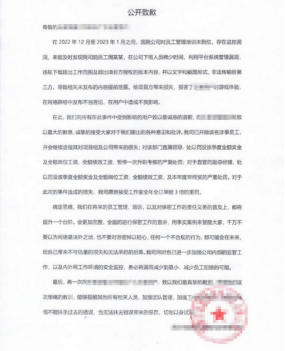
(3) If the source points to a partner and their internal investigation confirms employee involvement, the feedback can be submitted as self-admitted evidence.
(4) When collecting evidence of losses, companies should not only show high IP value but also collect negative feedback from players comparing leaked materials to final versions to prove the negative impact on the product.
(5) Claims for compensation should present a detailed breakdown of losses, including wasted resources, modification costs, changes to promotional plans, and legal fees.
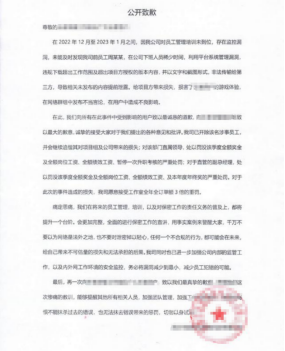
(6) Litigation may include a request for a public apology to serve as a deterrent.
PART 4: Conclusion
In summary, when facing the challenge of game material leaks, companies must adhere to legal boundaries and actively use legal weapons. This involves strict contractual constraints, internal confidentiality systems, rapid response, and forceful accountability. Only then can companies effectively avoid or reduce economic and brand damage and safeguard their legal rights.